
Politics, injustice and the role of football in all this.
On December 17th 2024, Kinvara United F.C. in South Galway posted on Facebook stating their sadness at the death of Muhammad Khalifa, who was killed in Gaza after an Israeli air-strike on the Nuseirat Refugee Camp in Palestine.
Eight years earlier, Muhammad visited Ireland with the Palestinian national youth team and spent time with Kinvara United. He was 12 years old at the time.
Chairman Paul O’Donnell said “It is desperately sad to think that a boy who played with our club members and in our community has had what should have been a bright future snatched away from him. We hope and pray that the people of Gaza will soon be safe and there will be no more senseless loss of life.”
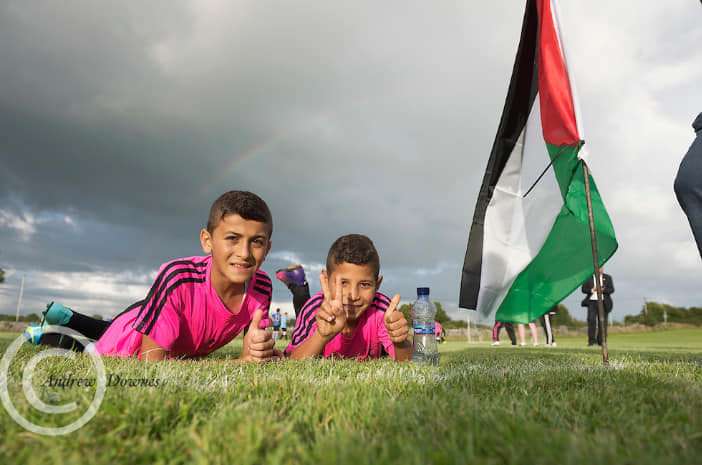
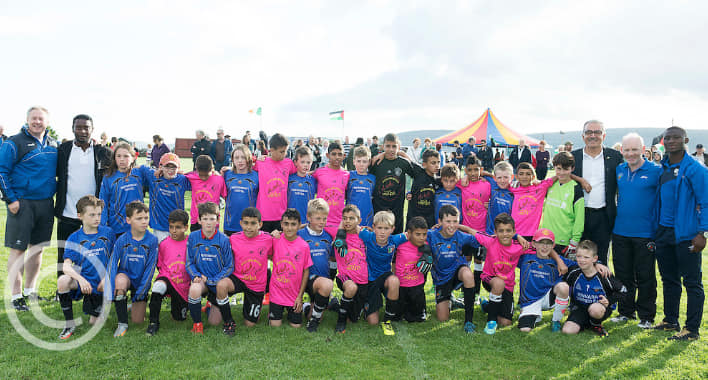
This is just one of thousands of tragic deaths that have arisen during the Israel-Palestine conflict, a matter of global political and humanitarian significance which one may argue has nothing to do with football or sport in general. However, this sentimental connection to a local football club in the West of Ireland does drive us to again ask the question: does football indeed have a role to play when it comes to creating awareness and highlighting injustices that take place in our world daily?
The Official Line
As a general rule, members of the Football Association of Ireland (FAI) are required to remain neutral in respect of all political and religious matters. Section 5.1.4 of the FAI Governance Handbook 2024 states that the FAI endeavours:

While Ireland officially recognised the State of Palestine in a statement released by Taoiseach Simon Harris in May 2024, the FAI have at times come under scrutiny for their lack of clarity in terms of their stance on the conflict – a stance which the FAI have defended based on UEFA policy:
“UEFA are allowing games against Israel, we are a member of UEFA, we abide by their rules,” said FAI president Paul Cooke when speaking to the Public Accounts Committee in February 2024. “On a personal and human level we are appalled by what is happening, we don’t condone it but are an affiliate of UEFA. It’s a matter for UEFA.”
Taking Matters Into Their Own Hands
In January 2024, Mark Ward TD led an unsuccessful campaign to host an international game between Ireland and Palestine at the Aviva Stadium, an event he said would “send a clear message not just to the Palestinian people, but right across the world”.
Speaking with Mr. Ward, he told me: “Having visited Palestine through my involvement in the successful Shamrock & Olive Tree boxing initiative – I saw first-hand how sport can cross divides, and I found out that never in the history of football have any European team ever played Palestine in a competitive or friendly match. I said, that’s wrong – so why don’t we (Ireland) be the first?”
“I contacted the FAI, but their response was almost a non-response – footballing reasons, they hadn’t got room in their fixture list.”
I asked Mr. Ward if he believes the FAI/UEFA do enough in terms of their stance/policy in relation to international conflicts such as these.
“The fact that no European team has ever played Palestine in an international football match, to me, is scandalous. That comes from UEFA directive, from high above, whether written or unwritten. The FAI don’t seem to want to be an outlier.”
Bohemians FC have previously shown their support of Palestine through their release of a Palestine-themed away jersey for which 10% of proceeds went to help support children in the West Bank. Former Ireland Manager Brian Kerr praised the move, stating “I have seen first-hand the power of football across the world, its ability to bring people together and help young people. I want to congratulate Bohemians on raising the plight of Palestinian children on this jersey and assisting them through football.”
In a demonstration of continued solidarity, Bohemians also last year held a friendly between their Senior Ladies side and the Palestine National Women’s team – a game held in front of a sold-out crowd of 4,290 which included President Michael D. Higgins.
“We have rights the same as you, to play, we have the right to express our feelings, we have the right to be recognised by the world. With this event, we’re telling them we exist.” Palestine defender Mira Natour speaking on their friendly against Bohemians in May 2024.
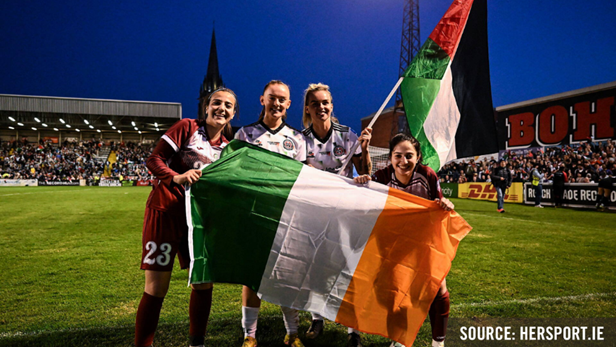
Bohemians Chief Operating Officer Daniel Lambert has long been outspoken on his views and support of Palestine:
“Is it a political act bringing them here? It is probably viewed by most people as being one, but it should not be. The game in Dalymount was the most emotional sporting event most in attendance will ever have witnessed, and it sent a strong message of solidarity to the Palestinian people from Ireland.”
Loud Voices
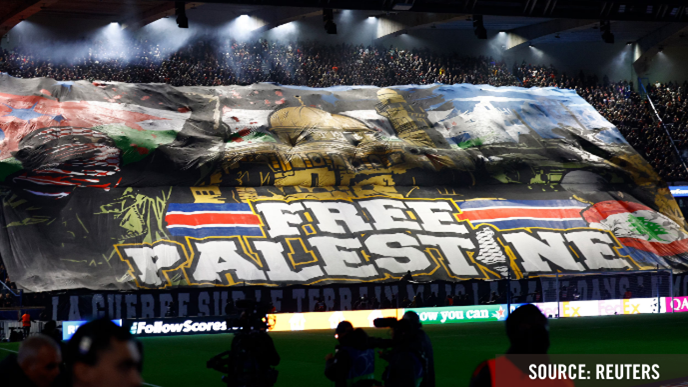
In November 2023 Celtic FC were fined £15,200 after their fans organised a Palestinian flag demonstration during their Champions League match against Atletico Madrid in Glasgow, while French Giants PSG narrowly escaped a fine for a similar display a month later.
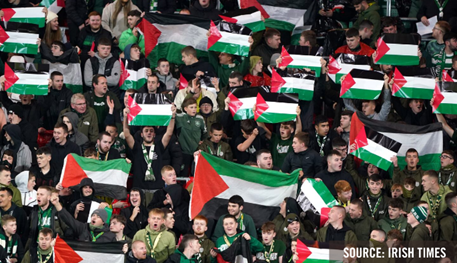
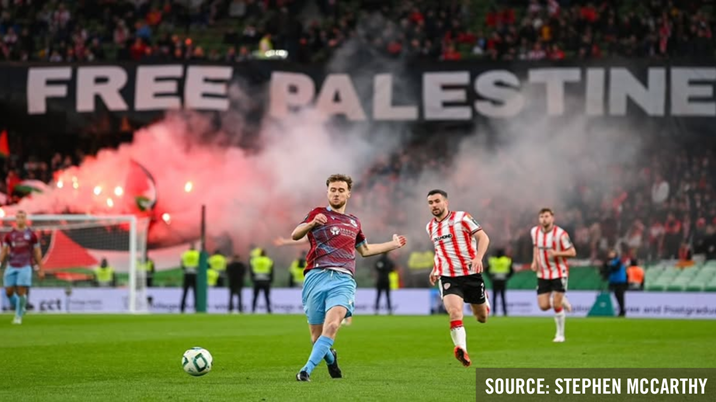
In November 2024 Ireland took centre stage as Derry City fans unveiled a Free Palestine banner during their FAI Cup Final clash against Drogheda at the Aviva Stadium in Dublin, which stewards and Gardai reportedly demanded be removed several times during the game. While not a direct action from the club, this was a clear demonstration by fans of their desire to show support for Palestine on as big a stage as possible.
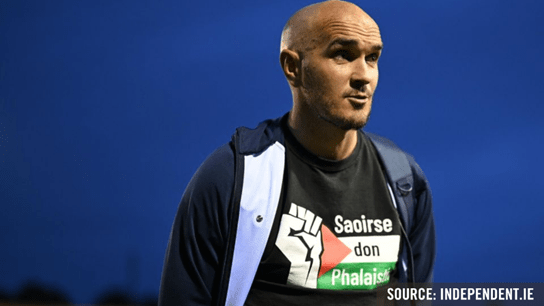
Former Ireland international and current Shelbourne FC Assistant Manager Joey O’Brien has been extremely vocal in his support of Palestine, and was frequently seen donning attire in support of Palestine last season. “It hasn’t been a new thing for me. I’ve been following it and watching it for years. But what has happened in the last few months has built it up to a broader base. It’s heartbreaking.”
In contrast, Ireland’s all-time appearance holder and record goal-scorer Robbie Keane came under controversy when he opted to stay on as manager of Israeli side Maccabi Tel Aviv last year, stating he had a “duty of care” to his staff and players.
“Let’s make it clear, what is happening is terrible and nobody wants to see it. But at the end of the day, I’m a football manager and my staff have got people to look after.”
For right or for wrong – FIFA, UEFA and subsequently the FAI’s unclear and undefined stance meant that many clubs and individuals had to take matters into their own hands to portray their sentiment, often against current rules which in turn has added more pressure and controversy around the topic. This continues to remain a grey area within the football world, and one might expect to see continued displays of support and solidarity from clubs, players and fan-bases until football’s governing organisations tackle the problem head-on, and define clear and transparent policies when it comes the role of football in creating awareness and highlighting injustice in the world.
 Paul Madden
Leave a comment